Herbarium

The Putnam Museum’s herbarium is available as part of the Plants of Iowa project.

THE PLANTS OF IOWA PROJECT

The Plants of Iowa project provides information about Iowa’s plants. At present the major focus is to document the plant specimens housed in Iowa’s smaller herbaria.

Inventories of the collections at Cornell College, Herbert Hoover National Historic Site, Iowa Lakeside Laboratory and Wartburg College have been completed. Each inventory provides the herbarium with a complete catalog of the information listed on the labels of all specimens in the collection which can be edited and/or expanded as necessary. Additionally, all of the data are posted online for use by the public. 

Digitization of the Putnam herbaria was supported by the Iowa Native Plant Society and the Iowa Science Foundation. 

The Plants of Iowa project is transforming small herbaria from cloistered cabinets of dry plants to repositories of abundant, easily accessed, natural history information. The assembled data can be used in a wide variety of research, educational and societal investigations about invasive species, plant distributions, genetics, rare species, climate change, phenology, ecology and many others topics. In addition, the project strives to encourage others to become involved in the completion of a statewide database of the specimens housed in all of Iowa’s small herbaria.

To learn more about the Plants of Iowa project, contact Nick Stoynoff at mr_sto@att.net

For more information about the Putnam’s collection, please contact Christine Chandler, Curator of Natural Science, at cchandler@putnam.org, or call (563) 324-1054 ext.226. 

History of the Collection

THE ACADEMY

The History of the Collection at The Putnam Museum and Science Center begins on December 14, 1867, when the Davenport Academy of Natural Sciences was established. Between 1865 and 1866, the idea of forming such a society had been discussed among a small group of like-minded individuals—A. U. Barler, Alfred Sanders, William Riepe, Prof. D. S. Sheldon, Dr. C. C. Parry, A. S. Tiffany and W. H. Pratt. A trip by Pratt to Ottawa, Illinois, in the spring of 1867, where he made the acquaintance of members of that city’s natural science academy, encouraged the group to attempt to establish a similar institution for Davenport. 

Mr. L. T. Eads, a local real estate agent, offered the use of his office at the southeast corner of Third and Perry streets, to house the group’s collections and serve as a meeting place. Pratt would later write, “So on Saturday evening, Dec. 7, 1867, Mr. Barler, Mr. Eads and myself met by appointment at Mr. Eads’s office to consult upon the ways and means, the possibilities and probabilities, and as to what we would dare to undertake, thinking that its success might depend somewhat upon the character of the first movement made. We had been unable to enlist men of means in the enterprise; we had no direct assurances of aid from any source; we knew that in a majority of cases where such a project was attempted, the interest died out after a short time, and the enterprise failed for what [want] of internal energy and persistence, and outside recognition and support.” Fearing they might be overwhelmed in their initial endeavor, they did not openly advertise their first meeting, but chose to personally invite a group of men whom they felt would likely join their project. 

On the evening of December 14, 1867, Barler, Eads, Tiffany and Pratt met and proceeded to organize a scientific society, adopting the form of constitution and by-laws of the Ottawa Academy and electing officers to serve for six months. The private collections of Barler, Tiffany, Eads, Sheldon, Riepe and Pratt formed the basis of the newly-minted Academy’s collection. In addition, Mrs. Alfred Sanders contributed her recently-deceased husband’s cabinet of minerals, fossils and recent shells to the endeavor, and others soon followed her lead.

Black and white historic exhibits, with rows of glass cases from the original Putnam Museum location.

In January 1868, the Academy received its first donation from outside the immediate area, a collection of crinoid fossils from Enoch May of Burlington, Iowa. That year also marked the first exchange with another institution, the Natural History Society of Portland, Maine. In early spring, they were offered a portion of the room occupied by the Young Men’s Library Association on the northeast corner of Brady and Second streets, Davenport, and Pratt began moving the Academy’s ever-growing collection to this new home in March of that year.

In 1869, Joseph Duncan Putnam and his mother, Mary Louisa Duncan Putnam (Mrs. Charles E. Putnam), were elected to membership in the Academy. Mrs. Putnam was the first woman elected to regular membership. Mrs. Sanders had been elected as an honorary member the previous year; her membership was transferred to the list of “corresponding members” upon changes in the Academy’s constitution. 

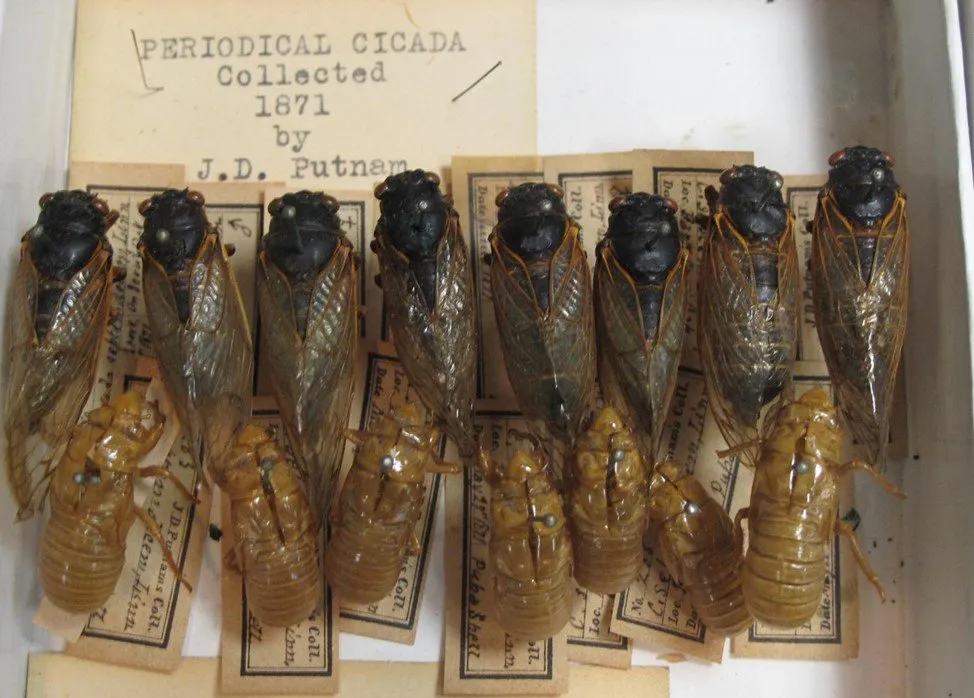
Although only a teenager, by the time J. D. Putnam joined the Academy, he had already assembled a large and significant collection of insects, minerals and geological specimens. He later participated in expeditions to Yellowstone, Colorado and Utah, and published investigations on bark lice and the Solpugidae before his death, at the age of 26, in 1881. Many of his collections remain with the museum today. 

Cicada collection from J.D. Putnam

While an academy of “natural sciences” in name, the Academy almost immediately began collecting historical artifacts as well. Civil War-era and other weapons; confederate and foreign currency; indenture agreements, books, and even a set of burglary tools, found their way into the early museum’s holdings.

Between 1872 and 1874, the Academy moved a number of times, finally taking up residence in a room in the Odd Fellows Building. A year later they rented an additional room there which they quickly filled as well. It was around this time that an array of prehistoric Mississippian material began to pour into the Academy’s collection halls. Collected along the lower Mississippi River by Wilfred P. Hall, a retired riverboat captain, these donations continued until the turn of the century. Captain Hall was one of the most picturesque characters associated with the Academy. Known as “the old man in a skiff,” he devoted himself to sailing up and down the Mississippi and its tributaries, distributing bibles and other religious tracts and collecting prehistoric relics. 

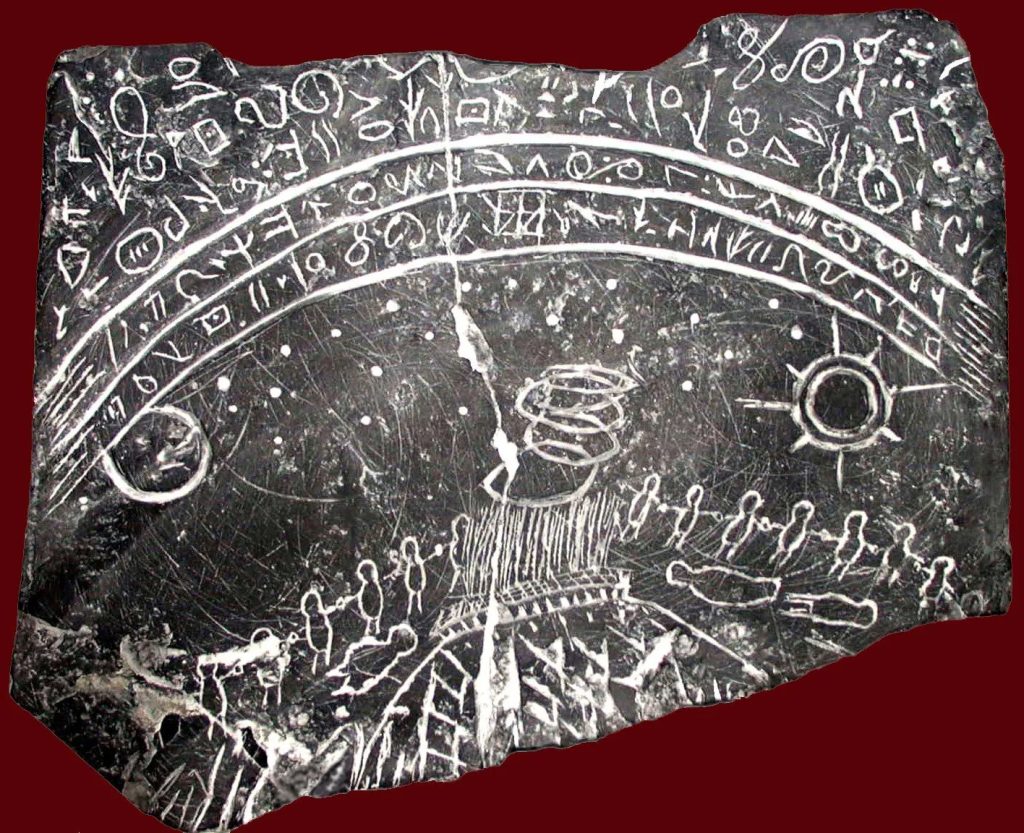
The American archaeological community was astounded in 1877 with the news that Rev. Jacob Gass, a member of the Academy, had unearthed two engraved slate tablets from an ancient burial mound site southwest of Davenport, Iowa. One tablet depicts a funeral pyre atop a mound with rows of “text” while the other incorporates crude images of animals, including something that looks like an elephant. The discovery fed the debate over the origins of the Mound Builders. Many at that time did not believe that Native Americans could possibly be the descendants of the people responsible for creating the gigantic earthworks found scattered throughout the eastern United States. The tablets were used as evidence to support that belief since there were no known native written languages in the United States. The nation squared off with some believing the tablets authentic and others believing them frauds. Articles and rebuttals appeared in all the major popular science and archaeological journals of the day. In the end, the Mound Builders were determined to be Native Americans, rather than some lost foreign population, and the tablets a fraud. 

There is some evidence to suggest that the tablets were created to embarrass Rev. Gass and that the “joke” simply got out of hand. Whatever their origins, the tablets helped spur a change in archaeological excavating practices. The days of haphazardly opening mounds gave way to a more scientific approach with detailed documentation of both the physical aspects of sites and the objects found during excavations.

Ancient black tablet with white markings, from the Putnam collection

A NEW HOME

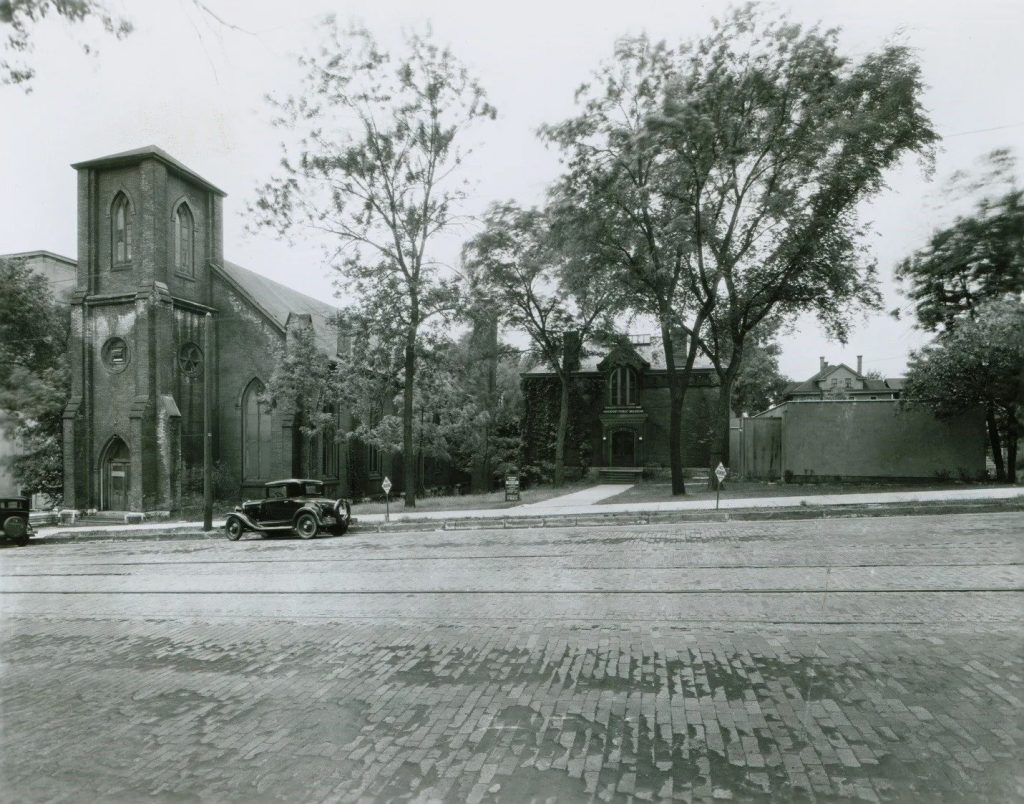
Through the tireless efforts of Mrs. Putnam, the Academy acquired property at the corner of 7th and Brady streets and raised sufficient funds to build a museum. The new Academy building opened its doors in February, 1878. Mrs. Putnam was later instrumental in the Academy’s acquiring the Presbyterian Church next door to the new museum, doubling its space. 

Black and white photo of the original location of the Putnam Museum, featuring tower on a cobblestone street with a historic car parked on the street.

With C. C. Parry as one of the leading proponents of the Academy, it is not surprising that plant collections made their way almost immediately into the museum. A collection of plants from the vicinity of Buffalo, New York, received from G. W. Clinton in February 1869, was one of the earliest to arrive. In 1880, the Academy received from Francis Koch a collection containing 1500 specimens of pressed plants from Pennsylvania, New Jersey and the North Atlantic Coast. Over time, the museum’s herbarium holdings would grow substantially with the acquisition of large collections from W. D. Barnes, W. W. Calkins, F. K. Reppert, Prof. Shimek, Serano Watson, E. A. Ross, Naomi Melville and Dr. L. F. Guldner, culminating in the acquisition in 2002 of the herbarium of Marycrest International University.

Marine and freshwater mollusks were of interest to several of the Academy founders. Prof. Sheldon and W. H. Pratt provided collections of local and foreign shells, and during the 1870s and 1880s, W. W. Calkins donated several large freshwater mollusk collections to the Academy, the largest of which included over 850 specimens. One of the more interesting early collections was obtained from S. S. Barr in 1880 consisting of “exceedingly small shells: the young of several species inhabiting our waters.” In December 1900, the Academy received the entire contents of Griswold College’s cabinet, including its extraordinary shell collection. 

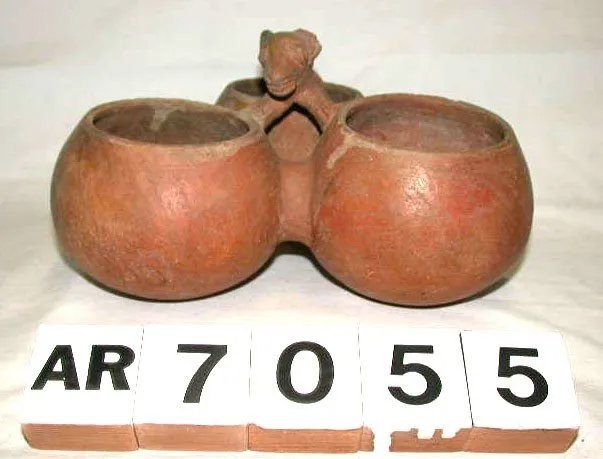
By the end of the 19th century, the Academy’s acquisitions consisted of collections from professional and amateur scientists alike. Historical objects were being donated by citizens interested in preserving the history of the region and its people, and the collections expanded in other directions as gifts were received from local world travelers such as C. A. Ficke and members of the Putnam family. Ficke, a Davenport attorney, traveled throughout Mexico and Peru gathering pre-Columbian artifacts. His collection of Nazca pottery was acquired in 1911 when there were only three museums in the world with similar holdings. Ficke also collected widely in Egypt, Italy, Greece, Japan and China, bringing back many artifacts from these civilizations to support the educational opportunities of the museum. 

Red stoneware bowl featuring three bowls connected with an animal head decoration, from the Putnam collection.

In 1914, noted anthropologist Truman Michelson assisted in the acquisition of a collection of Mesquakie (Fox) objects gathered at the Tama Settlement. That same year, Charles J. Beenck donated a large collection of local archaeological material (mostly projectile points). Other Native American collections were donated by Miss Elizabeth Duncan Putnam and William Clement Putnam, including his valuable collection of Native American baskets. 

In 1920, Capt. Walter P. Blair donated his steamboat photograph collection and archives as well as a large wooden eagle carved in 1845 that purportedly adorned the steamship Grey Eagle, commanded by Captain Daniel Smith Harris. The eagle recently underwent extensive conservation and repair at the Midwest Art Conservation Center (MACC) in Minneapolis. The Museum also acquired the records from the Frances Black General Store, in business from 1830-1890, containing 24 linear-feet of original manuscripts that document the early settlement and steamboating era of the Upper Mississippi.

Capt. Walter P. Blair steamboat eagle from the original Putnam Museum.
Capt. Walter P. Blair steamboat eagle in it's current location in the Putnam Museum.

Fig. 8. Carved wooden eagle before (left) and after (right) conservation. The process included stripping off layers of paint to reveal the details of the carving beneath.

The Academy changed its name in 1927 to the Davenport Public Museum in recognition of the institution’s development as a “public museum of science, history and art.” Since that time, the Museum has focused its collecting on objects, artifacts and specimens from eastern Iowa and western Illinois. This emphasis on the collections and interests of local citizens has enabled the museum to remain relevant to changing generations while documenting the cultural heritage and environmental history of our unique region. 

In 1927 a series of Friendship Dolls (tôrei-ningyô) were sent to the United States in response to the gift of over 12,000 dolls sent by American children to the children of Japan for the annual March Doll Festival (Hina Matsuri). After traveling the country the friendship dolls were placed with each of the then 48 states. Miss Bernice Ludien, General Secretary of the Young Women’s Christian Association of Davenport, was asked to find a museum to adopt the Iowa doll. In 1929, Miss Hokkaido arrived at the Davenport Public Museum to begin her tenure as Japanese Doll Ambassador to Iowa. A truly international treasure, Miss Hokkaido returned to Japan in 1988 for some much-needed conservation and was reunited in a tour of Japan with 20 of her sister Friendship Dolls.

Collection of Asian artifacts featuring four shiny black boxes with multiple drawers and gold textures and trim.

Preserving the early history of the region was definitely part of the museum’s mission during the 20th century. Furniture, personal items and documents belonging to Davenport pioneer Antoine LeClaire were obtained by the museum in the late 1940s, and additional items and documents associated with Antoine and his wife Marguerite have subsequently been added over time. As recently as 2010 the museum acquired a business agreement between Antoine LeClaire, George L. Davenport and Mr. Norva, dated January 1, 1853, about a brassworks.

In 1961 the museum set the cornerstone for a new building at 12th and Division streets in Davenport, and in October 1964 the museum opened in its new home. In 1965 a gift from the B. J. and Mabel H. Palmer Memorial Trust added over 2,000 artifacts and objects to the collection, and a new wing was added to the museum building to house and display the collection. Representing the broad and varied interests of B. J. Palmer, the President of the Palmer School of Chiropractic and internationally recognized as the developer of chiropractic, the donation strengthened established areas of the museum’s collections and provided important documentation on the life and travels of one of the region’s most prominent families. The Palmer bequest included a mummy and the sarcophagus of Isis Neferit (an Egyptian temple chantress), as well as art objects, archaeological, ethnological and natural history material from more than 20 countries. 

Colorful red, blue and gold beaded Egyptian necklace from the Putnam collection.

From the 1960s to the early 1990s, Mr. V.O. Figge donated taxidermy mounts of big game animals, representing his travels to Africa and other continents. A number of these can be seen today in dioramas in the museum’s Hall of Mammals. During that same time period, Gene McGreevy presented the museum with a major collection of political memorabilia. From posters to buttons, event tickets to paperweights, the collection encompasses memorabilia from before the Civil War to the mid-1980s. 

The 1960s saw a resurgence in the museum’s acquisition of natural science material. In 1964 Iowa Wesleyan College transferred its collection of mounted birds and bird eggs to the museum. The bird egg collection alone numbered approximately 2000 eggs, doubling the size of the museum’s pre-existing collection. And, from the early 1960s into the late 1970s Pete Petersen added a substantial number of local bird specimens to the zoology collections. Recent grants from the Iowa Science Foundation and the Riverboat Development Authority (now the Regional Development Authority) have supplied the funds for the museum to document and improve storage for these zoology collections.

Small white bird egg with black speckles, set against a black background from the Putnam collection.

In 1974, a major gift of pre-Columbian gold jewelry and other materials was donated through a bequest from Alice Dodge Schaeffer. Also in that year, the museum officially changed its name to the Putnam Museum to honor the family that had done so much to support and provide for the museum’s future. The Shorey Mineral Collection was received as a gift from Carma Shorey in 1986. The donation included fine jewelry and over 500 mineral specimens from around the world collected by Mrs. Shorey and her husband, Wilson H. Shorey. 

Multi-colored mineral with green, orange and blue starburst formations, set against a dark gray background, from the Putnam Museum collection.

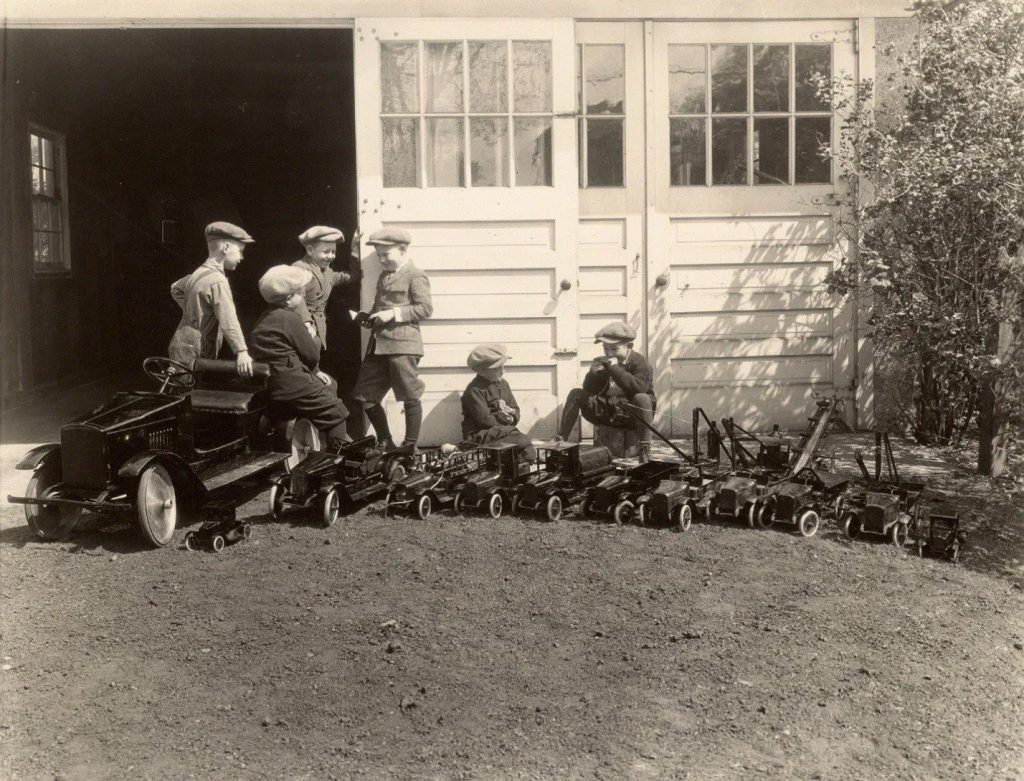
In the early 1990s, Mrs. Dorothy Lundahl donated the personal “toy” collection of Mr. and Mrs. A. B. Lundahl—Mr. Lundahl was the original “Buddy-L.” The collection of over 100 Buddy-L toys includes early designs made at the Moline Pressed Steel Co., as well as some later models from the 1950s and 1960s. The collection was augmented in 1999 and 2000 with the acquisition of a large archive of photographs and documents relating to the toy company from Albert W. McCollough. Finally, in 2010, the museum received a small collection of Buddy-L toys from Mr. and Mrs. Tom Smith that included the last toy produced at the Moline, Illinois, plant, as well as the last toy to be produced by Buddy-L at Neosho, Missouri.

Black and white of 6 young boys from the 1930's with a collection of toy cars, of varying sizes from the Buddy-L toy company.

The Free Photography Studio Collection, acquired in 1998, documents the lives of local residents and significant rites of passage in the Quad Cities during the 1900s in photographs. The museum subsequently was able to acquire one of the studio cameras used at the Free Studio as well. 

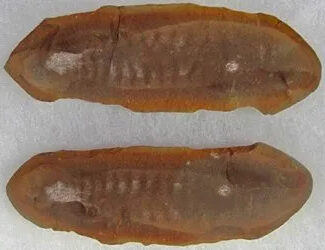
The paleontology collection saw the addition of a small collection of fossil animals from the famous Mazon Creek locality of Illinois between 2012 and 2013. While possessing a substantial collection of fossil plants from Mazon Creek that dates to the early days of the Academy, the museum lacked any animal fossils from the site. More importantly, this new collection includes a specimen of the state fossil of Illinois, the Tully Monster (Tullimonstrum gregarium).

Specimen of the state fossil of Illinois, the Tully Monster. A red-orange oblong rock with a faint lined pattern in the center.

As long-lived companies and institutions succumbed to the realities of late 20th century and early 21st century economics, documenting local businesses became even more important. To this end, the museum has acquired archives and artifacts from local businesses and organizations such as Eagle Foods, the Eagle Signal Corporation and the Telephone Pioneers. 

Other recent efforts have included an emphasis on documenting the cultural diversity of the Quad Cities area. The museum has sought out both historical and modern materials from groups and communities that are/have not been well-represented in the museum’s collections. We are currently collecting oral histories and creating a digital archive of images in an effort to provide a more complete picture of the history of the region, its people and their stories. 

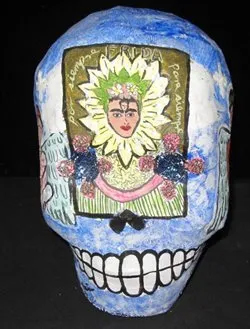
Skull painted with blue and a portrait of artist Frida Kahlo in a sunflower with a green and white flower headdress.
Antique curling iron with red handles set against a white background, from the Putnam collection.

WHO WE ARE (INSTITUTIONAL NAME CHANGES):

Davenport Academy of Natural Sciences, 1867 – 1900
Davenport Academy of Sciences, 1900 – 1927
Davenport Public Museum, 1927 – 1970
Davenport Museum, 1970 – 1974
Putnam Museum, 1974 – 1990
Putnam Museum of History and Natural Science, 1990 – 2014 
Putnam Museum and Science Center, 2014 – present. 

History of the Museum

THE DAVENPORT ACADEMY OF NATURAL SCIENCES

The history of the museum begins in 1865. At the time, conversations around forming a natural science society began amongst a small group of like-minded individuals. By 1867, A. U. Barler, Luther T. Eads, Asa Scott Tiffany and William H. Pratt proceeded to set the idea in motion. Using Mr. Ead’s office on the corner of Third and Perry Streets, they adopted the constitution and by-laws of the Ottawa Academy. The office would serve as a place to house the collections and for the group to meet.

The Davenport Academy of Natural Sciences was officially established on December 14, 1867.

William Pratt would later write, “So on Saturday evening…Mr. Barler, Mr. Eads and myself met by appointment at Mr. Eads’s office to consult upon the ways and means, the possibilities and probabilities, and as to what we would dare to undertake, thinking that its success might depend somewhat upon the character of the first movement made. We had been unable to enlist men of means in the enterprise; we had no direct assurances of aid from any source; we knew that in a majority of cases where such a project was attempted, the interest died out after a short time, and the enterprise failed for want of internal energy and persistence, and outside recognition and support.”

THE FIRST COLLECTIONS

Forming the basis of the Academy, the private collections of Mr. Barler, Tiffany, Eads, Pratt, D. S. Sheldon, and C. C. Parry were put on display. This included many mollusks and pressed plants. In addition, Mrs. Alfred Sanders contributed minerals, fossils and shells. Her donation came from the collection of her recently deceased husband, who played a pivotal role in discussions around the society. Soon, others followed her lead and donated to the endeavor. By January 1868, they received the first donation from outside the immediate area. The collection of crinoid fossils came from Enoch May of Burlington, Iowa.

Black and white historic exhibits, with rows of glass cases from the original Putnam Museum location.

While “natural sciences” was a main part of their name, the Academy almost immediately began collecting historical artifacts as well. Weapons, currency, legal agreements, books, and even a set of burglary tools found their way into the early museum’s holdings.

The Academy Expands

In early spring, they were offered a portion of the room occupied by the Young Men’s Library Association on the northeast corner of Brady and Second streets, Davenport. Pratt began moving the Academy’s ever-growing collection to this new home in March of that year.

Although only a teenager, Joseph Duncan Putnam contributed his significant collection of insects, minerals and geological specimens to the Academy. In 1869, he and his mother, Mary Louisa Duncan Putnam (Mrs. Charles E. Putnam), were elected to membership. Mrs. Putnam was the first woman elected to regular membership.

Cicada collection from J.D. Putnam

Between 1872 and 1874, the Academy moved a number of times. They finally settled in a room in the Odd Fellows Building. However, they needed to rent an additional room only a year later, which quickly filled as well. After all of this moving and expanding, the Academy acquired property through the tireless efforts of Mrs. Putnam. At the corner of 7th and Brady Streets, they built a museum. Later, Mrs. Putnam was instrumental in the acquisition of the Presbyterian Church next door to the new museum. This allowed them to double their space. 

THE COLLECTION GROWS

Throughout their building expansions, the collection continued to grow and thrive. Partly due to the influence of C. C. Parry, the herbarium had significant donations. In 1880, the Academy received Francis Koch’s collection containing 1500 specimens of pressed plants from Pennsylvania, New Jersey and the North Atlantic Coast. Large donations from William D. Barnes, William W. Calkins, Ferdinand K. Reppert, Serano Watson, Edith A. Ross, Naomi Melville, Professor Shimek and Dr. Guldner were also acquired over time.

During the 1870s and 1880s, Mr. Calkins donated several large freshwater mollusk collections to the Academy, the largest of which included over 850 specimens. By the end of the 19th century, the Academy’s acquisitions consisted of collections from professional and amateur scientists alike.

Historical objects were also being donated by citizens interested in preserving the history of the region and its people. The collections expanded in other directions as gifts were received from local world travelers such as Charles A. Ficke and members of the Putnam family.

THE MUSEUM BUILDS A HOME

As the Academy continued to expand, the name was changed to the Davenport Public Museum in recognition of the institution’s development as a “public museum of science, history and art.” Since that time, the Museum has focused its collection on objects, artifacts and specimens from eastern Iowa and western Illinois. Emphasizing the region and local citizens has allowed the museum to remain relevant to changing generations while documenting the cultural heritage and environmental history of our unique region. 

In 1961, a cornerstone was set for a new building at 12th and Division Streets in Davenport. On October 3rd, 1964, the new museum was opened.

In 1965, the B. J. and Mabel H. Palmer Memorial Trust donated over 2,000 items to the collection. As part of their generous gift, a new wing was added to the museum building to house and display the collection. This included a mummy and the sarcophagus of Isis Neferit (an Egyptian temple chantress), which are still on display in Unearthing Ancient Egypt.

As the collection continued to expand, Mr. Vivian Otto Figge donated large mammals from his hunting expeditions. Today, some can still be viewed in the Hall of Mammals. Other notable donations include birds and eggs from the Iowa Wesleyan College, jewelry through Alice Dodge Schaeffer, political memorabilia from Gene McGreevy, and minerals from the Shorey Mineral Collection.

THE PUTNAM MUSEUM

In 1974, the museum officially changed its name to the Putnam Museum to honor the family that had done so much to support and provide for the museum’s future.

Recently, efforts have included an emphasis on documenting the cultural diversity of the Quad Cities area. The museum has been seeking both historical and modern materials from groups and communities that are or have not been well-represented in the museum’s collections. In 2023, Common Ground: Our Voice, Our Stories was opened to celebrate this local heritage.

Currently, we are collecting oral histories and creating a digital archive of images in an effort to provide a more complete picture of the history of the region, its people and their stories. 

The Timeline of Institutional Names

1867 – 1900: Davenport Academy of Natural Sciences
1900 – 1927: Davenport Academy of Sciences
1927 – 1970: Davenport Public Museum
1970 – 1974: Davenport Museum
1974 – 1990: Putnam Museum
1990 – 2014: Putnam Museum of History and Natural Science
2014 – present: Putnam Museum and Science Center

The Anthropology Collection

THE ACADEMY

The Putnam Museum and Science Center was originally established on December 14, 1867, as the Davenport Academy of Natural Sciences.  The private collections of Barler, Tiffany, Eads, Sheldon, Riepe and Pratt formed the basis of the newly-minted Academy’s collection. In addition, Mrs. Alfred Sanders contributed her recently-deceased husband’s cabinet of minerals, fossils and recent shells to the endeavor, and others soon followed her lead.

While an academy of “natural sciences” in name, the Academy almost immediately began collecting historical artifacts as well. Civil War-era and other weapons; confederate and foreign currency; indenture agreements, books, and even a set of burglary tools, found their way into the early museum’s holdings.

Black and white historic exhibits, with rows of glass cases from the original Putnam Museum location.

In 1869, Joseph Duncan Putnam and his mother, Mary Louisa Duncan Putnam (Mrs. Charles E. Putnam), were elected to membership in the Academy. Mrs. Putnam was the first woman elected to regular membership.

Between 1872 and 1874, the Academy moved a number of times, finally taking up residence in a room in the Odd Fellows Building. A year later they rented an additional room there which they quickly filled as well. Through the tireless efforts of Mrs. Putnam, the Academy acquired property at the corner of 7th and Brady streets and raised sufficient funds to build a museum. The new Academy building opened its doors in February, 1878. Mrs. Putnam was later instrumental in the Academy’s acquiring the Presbyterian Church next door to the new museum, doubling its space. 

THE DAVENPORT TABLETS

One of the more controversial anthropological pieces in the collection came into public knowledge around this time. Rev. Jacob Gass, a member of the Academy, had unearthed two engraved slate tablets from an ancient burial mound site southwest of Davenport, Iowa. One tablet depicts a funeral pyre atop a mound with rows of “text” while the other incorporates crude images of animals, including something that looks like an elephant. The discovery fed the debate over the origins of the Mound Builders. Many at that time did not believe that Native Americans could possibly be the descendants of the people responsible for creating the gigantic earthworks found scattered throughout the eastern United States. The tablets were used as evidence to support that belief since there were no known native written languages in the United States.

The nation squared off with some believing the tablets authentic and others believing them frauds. Articles and rebuttals appeared in all the major popular science and archaeological journals of the day. In the end, the Mound Builders were determined to be Native Americans, rather than some lost foreign population, and the tablets a fraud. There is some evidence to suggest that the tablets were created to embarrass Rev. Gass and that the “joke” simply got out of hand.

Whatever their origins, the tablets helped spur a change in archaeological excavating practices. The days of haphazardly opening mounds gave way to a more scientific approach with detailed documentation of both the physical aspects of sites and the objects found during excavations.

Ancient black tablet with white markings, from the Putnam collection

THE COLLECTION EXPANDS

By the end of the 19th century, archeological objects were often being donated by citizens interested in preserving the history of the region and its people. The collections expanded in other directions as well, with gifts received from local world travelers such as C. A. Ficke and members of the Putnam family. Ficke, a Davenport attorney, traveled throughout Mexico and Peru gathering pre-Columbian artifacts. His collection of Nazca pottery was acquired in 1911 when there were only three museums in the world with similar holdings. Ficke also collected widely in Egypt, Italy, Greece, Japan and China, bringing back many artifacts from these civilizations to support the educational opportunities of the museum. 

Red stoneware bowl featuring three bowls connected with an animal head decoration, from the Putnam collection.

In 1914, noted anthropologist Truman Michelson assisted in the acquisition of a collection of Mesquakie (Fox) objects gathered at the Tama Settlement. That same year, Charles J. Beenck donated a large collection of local archaeological material (mostly projectile points). Other Native American collections were donated by Miss Elizabeth Duncan Putnam and William Clement Putnam, including his valuable collection of Native American baskets. Our curatorial team is currently working on returning these objects to generational owners with the help of NAGPRA guidelines.

MISSISSIPPI STEAMBOATS

In 1920, Capt. Walter P. Blair donated his steamboat photograph collection and archives as well as a large wooden eagle carved in 1845 that purportedly adorned the steamship Grey Eagle, commanded by Captain Daniel Smith Harris. The eagle recently underwent extensive conservation and repair at the Midwest Art Conservation Center (MACC) in Minneapolis. The Museum also acquired the records from the Frances Black General Store, in business from 1830-1890, containing 24 linear-feet of original manuscripts that document the early settlement and steamboating era of the Upper Mississippi.

THE PUBLIC MUSEUM

The Academy changed its name in 1927 to the Davenport Public Museum in recognition of the institution’s development as a “public museum of science, history and art.” Since that time, the Museum has focused its collecting on objects, artifacts and specimens from eastern Iowa and western Illinois. This emphasis on the collections and interests of local citizens has enabled the museum to remain relevant to changing generations while documenting the cultural heritage and environmental history of our unique region. 

JAPANESE FRIENDSHIP DOLLS

In 1927 a series of Friendship Dolls (tôrei-ningyô) were sent to the United States in response to the gift of over 12,000 dolls sent by American children to the children of Japan for the annual March Doll Festival (Hina Matsuri). After traveling the country the friendship dolls were placed with each of the then 48 states. Miss Bernice Ludien, General Secretary of the Young Women’s Christian Association of Davenport, was asked to find a museum to adopt the Iowa doll. In 1929, Miss Hokkaido arrived at the Davenport Public Museum to begin her tenure as Japanese Doll Ambassador to Iowa. A truly international treasure, Miss Hokkaido returned to Japan in 1988 for some much-needed conservation and was reunited in a tour of Japan with 20 of her sister Friendship Dolls.

Collection of Asian artifacts featuring four shiny black boxes with multiple drawers and gold textures and trim.

THE LECLAIRE FAMILY

Furniture, personal items and documents belonging to Davenport pioneer Antoine LeClaire were obtained by the museum in the late 1940s, and additional items and documents associated with Antoine and his wife Marguerite have subsequently been added over time. As recently as 2010, the museum acquired a business agreement between Antoine LeClaire, George L. Davenport and Mr. Norva, dated January 1, 1853, about a brassworks.

THE PALMER FAMILY

In 1961, the museum set the cornerstone for a new building at 12th and Division streets in Davenport. A year after opening, a gift from the B. J. and Mabel H. Palmer Memorial Trust added over 2,000 artifacts and objects to the collection, and a new wing was added to the museum building to house and display the collection. Representing the broad and varied interests of B. J. Palmer, the President of the Palmer School of Chiropractic and internationally recognized as the developer of chiropractic, the donation strengthened established areas of the museum’s collections and provided important documentation on the life and travels of one of the region’s most prominent families. The Palmer bequest included a mummy and the sarcophagus of Isis Neferit (an Egyptian temple chantress), as well as art objects, archaeological, ethnological and natural history material from more than 20 countries. 

Colorful red, blue and gold beaded Egyptian necklace from the Putnam collection.

THE COLLECTION CONTINUES

From the 1960s to the early 1990s, Gene McGreevy presented the museum with a major collection of political memorabilia. From posters to buttons, event tickets to paperweights, the collection encompasses memorabilia from before the Civil War to the mid-1980s. In 1974, a major gift of pre-Columbian gold jewelry and other materials was donated through a bequest from Alice Dodge Schaeffer.

In the early 1990s, Mrs. Dorothy Lundahl donated the personal “toy” collection of Mr. and Mrs. A. B. Lundahl—Mr. Lundahl was the original “Buddy-L.” The collection of over 100 Buddy-L toys includes early designs made at the Moline Pressed Steel Co., as well as some later models from the 1950s and 1960s. The collection was augmented in 1999 and 2000 with the acquisition of a large archive of photographs and documents relating to the toy company from Albert W. McCollough. Finally, in 2010, the museum received a small collection of Buddy-L toys from Mr. and Mrs. Tom Smith that included the last toy produced at the Moline, Illinois, plant, as well as the last toy to be produced by Buddy-L at Neosho, Missouri.

Black and white of 6 young boys from the 1930's with a collection of toy cars, of varying sizes from the Buddy-L toy company.

The Free Photography Studio Collection, acquired in 1998, documents the lives of local residents and significant rites of passage in the Quad Cities during the 1900s in photographs. The museum subsequently was able to acquire one of the studio cameras used at the Free Studio as well. 

THE PUTNAM TODAY

As long-lived companies and institutions succumbed to the realities of late 20th century and early 21st century economics, documenting local businesses became even more important. To this end, the museum has acquired archives and artifacts from local businesses and organizations such as Eagle Foods, the Eagle Signal Corporation and the Telephone Pioneers. 

Other recent efforts have included an emphasis on documenting the cultural diversity of the Quad Cities area. The museum has sought out both historical and modern materials from groups and communities that are/have not been well-represented in the museum’s collections. We are currently collecting oral histories and creating a digital archive of images in an effort to provide a more complete picture of the history of the region, its people and their stories. 

The Natural History Collection

THE ACADEMY

The Putnam Museum and Science Center was established on December 14, 1867, as the Davenport Academy of Natural Sciences. Barler, Eads, Tiffany and Pratt met and proceeded to organize a scientific society, adopting the form of constitution and by-laws of the Ottawa Academy and electing officers to serve for six months. The private collections of Barler, Tiffany, Eads, Sheldon, Riepe and Pratt formed the basis of the newly-minted Academy’s collection. In addition, Mrs. Alfred Sanders contributed her recently-deceased husband’s cabinet of minerals, fossils and recent shells to the endeavor, and others soon followed her lead.

Black and white historic exhibits, with rows of glass cases from the original Putnam Museum location.

In January 1868, the Academy received its first donation from outside the immediate area, a collection of crinoid fossils from Enoch May of Burlington, Iowa. That year also marked the first exchange with another institution, the Natural History Society of Portland, Maine.

In 1869, Joseph Duncan Putnam and his mother, Mary Louisa Duncan Putnam (Mrs. Charles E. Putnam), were elected to membership in the Academy. Although only a teenager, by the time J. D. Putnam joined the Academy, he had already assembled a large and significant collection of insects, minerals and geological specimens. He later participated in expeditions to Yellowstone, Colorado and Utah, and published investigations on bark lice and the Solpugidae before his death, at the age of 26, in 1881. Many of his collections remain with the museum today. 

Cicada collection from J.D. Putnam

A NEW HOME

Between 1872 and 1874, the Academy moved a number of times, finally taking up residence in a room in the Odd Fellows Building. A year later they rented an additional room there which they quickly filled as well.

Through the tireless efforts of Mrs. Putnam, the Academy acquired property at the corner of 7th and Brady streets and raised sufficient funds to build a museum. The new Academy building opened its doors in February, 1878. Mrs. Putnam was later instrumental in the Academy’s acquiring the Presbyterian Church next door to the new museum, doubling its space. 

Black and white photo of the original location of the Putnam Museum, featuring tower on a cobblestone street with a historic car parked on the street.

THE HERBARIUM BEGINS

With C. C. Parry as one of the leading proponents of the Academy, it is not surprising that plant collections made their way almost immediately into the museum. A collection of plants from the vicinity of Buffalo, New York, received from G. W. Clinton in February 1869, was one of the earliest to arrive. In 1880, the Academy received from Francis Koch a collection containing 1500 specimens of pressed plants from Pennsylvania, New Jersey and the North Atlantic Coast. Over time, the museum’s herbarium holdings would grow substantially with the acquisition of large collections from W. D. Barnes, W. W. Calkins, F. K. Reppert, Prof. Shimek, Serano Watson, E. A. Ross, Naomi Melville and Dr. L. F. Guldner, culminating in the acquisition in 2002 of the herbarium of Marycrest International University.

MOLLUSK COLLECTIONS

Marine and freshwater mollusks were of interest to several of the Academy founders. Prof. Sheldon and W. H. Pratt provided collections of local and foreign shells, and during the 1870s and 1880s, W. W. Calkins donated several large freshwater mollusk collections to the Academy, the largest of which included over 850 specimens. One of the more interesting early collections was obtained from S. S. Barr in 1880 consisting of “exceedingly small shells: the young of several species inhabiting our waters.” In December 1900, the Academy received the entire contents of Griswold College’s cabinet, including its extraordinary shell collection. 

THE PUBLIC MUSEUM

The Academy changed its name in 1927 to the Davenport Public Museum in recognition of the institution’s development as a “public museum of science, history and art.” Since that time, the Museum has focused its collecting on objects, artifacts and specimens from eastern Iowa and western Illinois. This emphasis on the collections and interests of local citizens has enabled the museum to remain relevant to changing generations while documenting the cultural heritage and environmental history of our unique region. 

RESURGENCE IN THE 60’s

From the 1960s to the early 1990s, Mr. V.O. Figge donated taxidermy mounts of big game animals, representing his travels to Africa and other continents. A number of these can be seen today in dioramas in the museum’s Hall of Mammals.

The 1960s saw a resurgence in the museum’s acquisition of natural science material. In 1964 Iowa Wesleyan College transferred its collection of mounted birds and bird eggs to the museum. The bird egg collection alone numbered approximately 2000 eggs, doubling the size of the museum’s pre-existing collection. And, from the early 1960s into the late 1970s Pete Petersen added a substantial number of local bird specimens to the zoology collections. Recent grants from the Iowa Science Foundation and the Riverboat Development Authority (now the Regional Development Authority) have supplied the funds for the museum to document and improve storage for these zoology collections.

Small white bird egg with black speckles, set against a black background from the Putnam collection.

The Shorey Mineral Collection was received as a gift from Carma Shorey in 1986. The donation included fine jewelry and over 500 mineral specimens from around the world collected by Mrs. Shorey and her husband, Wilson H. Shorey. 

Multi-colored mineral with green, orange and blue starburst formations, set against a dark gray background, from the Putnam Museum collection.

MODERN DAY

The paleontology collection saw the addition of a small collection of fossil animals from the famous Mazon Creek locality of Illinois between 2012 and 2013. While possessing a substantial collection of fossil plants from Mazon Creek that dates to the early days of the Academy, the museum lacked any animal fossils from the site. More importantly, this new collection includes a specimen of the state fossil of Illinois, the Tully Monster (Tullimonstrum gregarium).

Specimen of the state fossil of Illinois, the Tully Monster. A red-orange oblong rock with a faint lined pattern in the center.

Other recent efforts have included an emphasis on documenting the cultural diversity of the Quad Cities area. The museum has sought out both historical and modern materials from groups and communities that are/have not been well-represented in the museum’s collections. We are currently collecting oral histories and creating a digital archive of images in an effort to provide a more complete picture of the history of the region, its people and their stories. 

Rental Form

Tell Us About Your Event!

Rental Form
Name
Name
Event Time

Feel free to use our Venue Menu as a reference while filling this form out.

Group Snack Stop Form

Group Snack Stop Purchase Form

Group Snack Stop Purchase Form
Arrival Time
Scheduled Movie Time

Learn more about group visits to the Putnam and the snack stop here.

The Greater Kudu

Discover the Grey Ghost

The Greater Kudu, also known as the Grey Ghost due to its elusive nature, is a large antelope found in Eastern and Southern Africa. It is one of the tallest antelopes, standing up to 1.2 meters at the shoulder, and can weigh up to 315 kg. The males have impressive horns that can grow up to 1.8 meters in length, and are twisted in a corkscrew shape.

Greater Kudus are predominantly browsers, feeding on leaves, twigs, and fruits, but will also graze on grass during the wet season. They are known for their excellent eyesight and hearing, which make them difficult to spot in the wild. They are also excellent jumpers, capable of leaping over fences and obstacles up to 3 meters high.

Despite being hunted for their meat and horns, the Greater Kudu population remains stable in many areas due to conservation efforts. They are a popular species for wildlife viewing and attract many tourists to Africa.

See one in Putnam Museum’s Hall of Mammals

Wild Africa

BBC Earth’s WILD AFRICA 3D is a spectacular journey across the wildest continent on earth. Students will fly along the Great Rift Valley following the twisting rivers to discover a family of elephants on their epic search for water.

Meet hungry crocodiles waiting at water holes for the annual wildebeest migration on the savannahs of the Serengeti, a family of mountain gorillas in the forests of Rwanda and thousands of flamingos performing a mating display in the volcanic Lake Bogoria.

From the highest mountains in Kenya, along great rivers, into steamy rainforests and across wide-open savannahs, you and your class will explore the striking contrast of stunning deserts beside wild oceans and the sunlit abundance of the coral reefs.

Water, the interconnecting force of this kingdom, serves as a guide, shaping wild Africa and conjuring up life wherever it journeys.

Starring Helena Bonham Carter and directed by Mike Slee, this 45 minute short documentary is brought to you by the team that created the award-winning Planet Earth. From raging rivers to sheltering corals, watering holes to massive jungles – the film showcases that enchanting natural world of a wild Africa.

See movie showtimes here.

Learn more about BBC’s Wild Africa here.

Volcanoes – 3D

The Fires of Creation

Earth is a planet born of fire. For billions of years, volcanoes have helped forge the world we know. From the continents to the air we breathe and even life itself, all have been shaped by volcanic energy. These processes have created extraordinary ecosystems and wildlife habitats. With over 500 active volcanoes, the Earth is bursting at the seams with these forces of mass construction. The story of volcanoes is the story of the planet’s creation and the story of us.

With intrepid explorer Carsten Peter, dodge boulders at the edge of an active volcano in Indonesia, descend to a lava lake in Vanuatu and visit incredible acid ponds, geysers and mineral deposit fields in Ethiopia. Travel across the globe to see the archeological ghost town of Pompeii, hydrothermal vents at the bottom of the ocean and witness the devastating effects of the 2018 Kilauea eruption in Hawaii.

Audiences will be on the edge of their seats as they discover molten worlds and exploding craters in this adrenaline-filled, immersive experience that only IMAX®/Giant Screen films can provide.

All educational materials meet Next Generation Science Standards and Volcanoes: The Fires of Creation fits into curriculums worldwide. Download the Educator’s Guide and bring the explosive power of volcanoes into your classroom!

Learn more at http://volcanoesfilm.com/

Upcoming Showtimes

  • No events